
Ep. 53: Is Shopify Right for Your Brick-and-Mortar Store?
As a Shopify Partner, I’ve designed websites for other small business owners on the Shopify platform. It’s an incredible platform with tons of features that allow anyone to set up an online store. But Shopify isn’t the perfect fit for everyone, so I’m going to share what I like and dislike about Shopify so you can confidently decide if Shopify is right for you.
What is Shopify?
Shopify describes itself as “a commerce platform that allows anyone to set up an online store and sell their products…Shopify is now the leading commerce platform designed for businesses of all sizes. Whether you sell online, on social media, in-store, or out of the trunk of your car, Shopify has you covered.”
Shopify is one of the few platforms that gives you…
1) a website you can build on your own
2) an eCommerce/online shop
3) the hardware and a POS system so you can sell in your b&m store
4) integration and syncing: this is extremely important because whether a customer buys something in person or online, your inventory is managed from one system and syncs correctly.
5) a user-friendly interface
There are many POS software companies that don’t offer an all-in-one solution. Other companies are shifting towards this type of omnichannel retail platform, but in terms of a platform that is ALSO user-friendly, Shopify does it best.
Is Shopify Right for Your Business?
As much as I prefer Shopify, it isn’t the right fit for everyone! Let’s break down some pros and cons for different types of businesses that might choose Shopify.
Businesses That Need a Variety of Features
Although Shopify is an all-in-one platform, all-in-one does not mean all-inclusive. Shopify can get pricey as you start to add “Apps.” It’s similar to when you add apps to your phone: some are free, but some cost. The more robust the app, the higher the price.
When I recorded this episode in 2020, I often saw micro-retailers using 8-15 apps to get the features they wanted. That is an observation from that time, not a required app count. Choose apps based on the features you need and their total ongoing cost.
Makers With Online Shops
Shopify is usually a good fit for makers who sell online for the following reasons:
- Website building is easy: Because Shopify’s platform is a drag and drop style, building a website is relatively straightforward. It’s also pretty affordable to find a designer to make it for you. In general, you don’t need a developer (if you do need a developer, this is where it can get expensive).
- Makers tend to have small catalogs: If you’re making handmade products, you most likely don’t make more than 30 or 40 different products. Your library of products is small compared to a brick and mortar store with 100’s or even 1000’s of sku’d products.
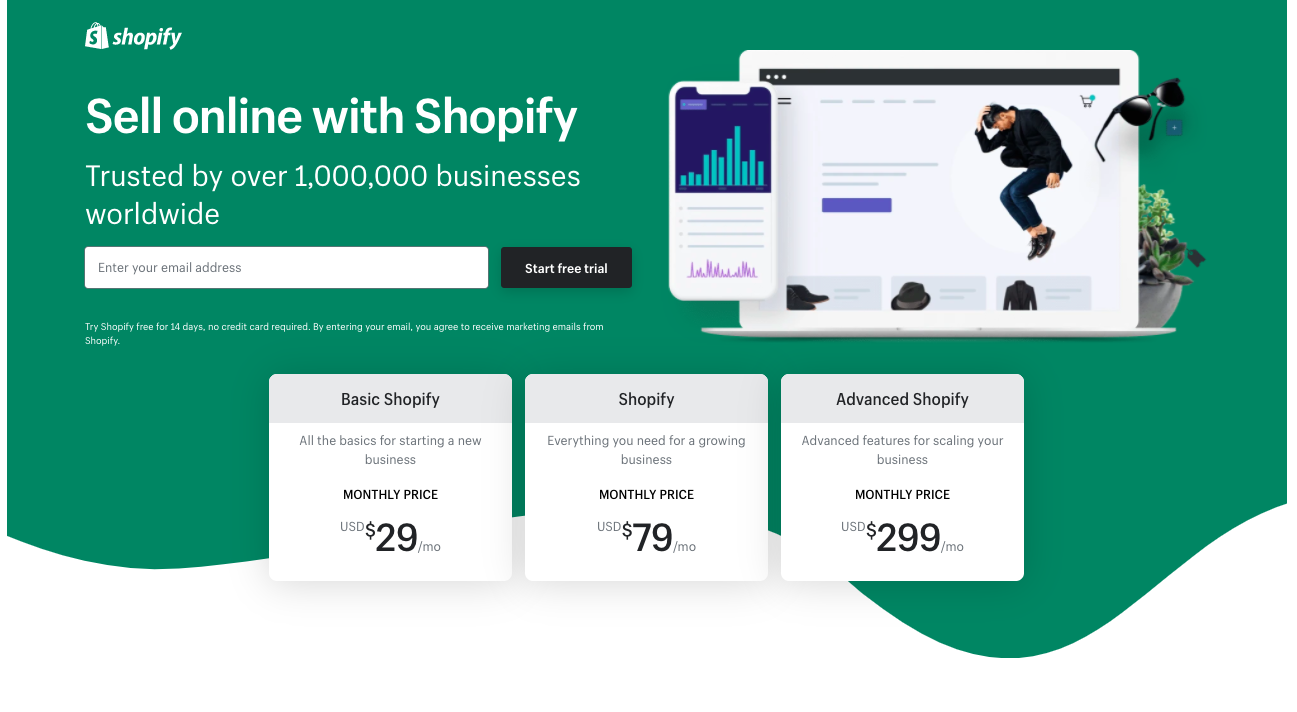
- Evaluate the full cost: Compare the subscription, paid apps, hardware, payment processing, and any setup or migration work. The $29 monthly figure discussed in the recording was a December 2020 price. Check Shopify’s current pricing for your location, billing term, and needs.
- Shipping is automatically calculated and easy to manage
- You can use a mobile credit card reader: so you can sell in-person at market events.
- You can sell wholesale to B&M store owners: there are apps on Shopify that let you build an area on your site where store owners can place wholesale orders with you. If you have a solid wholesale business or you’re trying to develop that portion of your business, giving brick and mortar store owners a user-friendly place to buy from you at wholesale prices is worth the investment.
- Social selling: You can integrate Shopify with Facebook and Instagram so you can sell through those platforms. This takes some extra work to set up, but it’s worth it if you have a strong social presence.
eCommerce Shop Owners
These are the retail business owners who resell products by selling online (they don’t make their own products, and they don’t have a brick and mortar). A good example of this is apparel or fashion online-only boutiques.
Like the makers with online shops that I just talked about, Shopify seems to be a good option for these retailers.
Brick and Mortar Store Owners
This is where my recommendation can vary depending on your business’ needs!
Do you need an integrated POS system?
For in-person selling, budget for compatible hardware as well as your Shopify subscription. Some POS features are included with paid Shopify plans, while POS Pro adds advanced retail features for an additional fee per location. Review current Shopify POS pricing before choosing your setup.
- Included in-person selling features available with your paid Shopify plan.
- POS Pro: an optional paid add-on per location. The $89 figure in the recording was quoted in December 2020, so use the current pricing page for your budget.
New brick and mortar store owners
It’s going to be easier for you to start and set up Shopify than an existing brick and mortar store owner. You’re starting from scratch, and you would have to do the setup work when opening your store.
Seasoned B&M store owners
You have the most to consider. You probably already have systems in place like a POS system, loyalty program, gift cards, email marketing, and maybe even an online shop. That’s a lot of changes to make if you switch to Shopify!
Some B&M owners build their website and online shop on Shopify but use a different POS. I’m not a massive fan of this because inventory control becomes an issue, and financial reporting can be challenging, too.
Here’s a list of questions to guide your decision about Shopify as a seasoned B&M store owner:
- Are you comfortable building the website yourself, or will you need to hire someone?
- Will it be easy to export data/inventory from your old system and import it into Shopify?
- If you’ve used reports (financial or inventory) from your old system, what happens to that information?
- Does your current email marketing software play nicely with Shopify?
- If you have a loyalty program in place, what about that information, and how do you inform your customers?
- Does Shopify integrate with any bookkeeping software you use?
- Will you need to scrap your gift card system and start over with Shopify’s gift cards?
So, Is Shopify Right For You?
One of the most significant selling points for Shopify is that it genuinely provides retailers with the ability to provide their customers with an omnichannel experience. Having a seamless experience—whether they buy from you online, in-store, on social media, or in-person—is a huge benefit for you and your customers.
If Shopify looks like a fit, explore Shopify and its current trial offer. Trial length, promotional pricing, and plan terms can change, so review them before signing up.
Resources
Timestamps
- [02:15] What is Shopify?
- [02:44] Shopify gives you…
- [04:51] Is Shopify right for YOUR business?
- [05:17] Businesses that need a variety of features
- [07:21] Makers with online shops
- [11:51] eCommerce shop owners
- [12:31] Brick & mortar store owners


